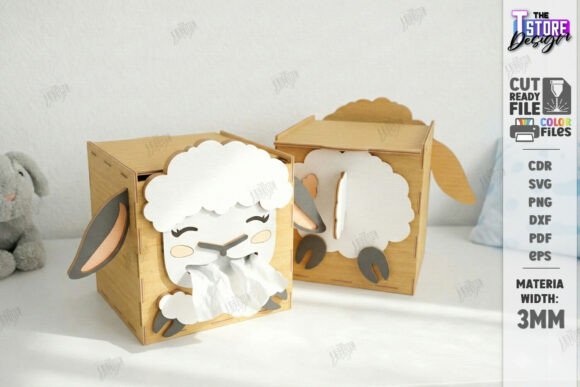
Funny Animal Laser Cut Tissue Box Designs
There is something undeniably satisfying about transforming a plain, utilitarian object into a piece of art that sparks joy. In the world of digital crafting and laser cutting, few projects offer as much immediate gratification and practical use as creating custom tissue box covers. Specifically, designs featuring funny animal laser cut tissue box patterns have become a favorite among makers. These 3D character designs do more than just hold tissues; they add personality to a room, serve as excellent conversation starters, and provide a fantastic opportunity for crafters to showcase their machine's capabilities.
Whether you are a seasoned professional running a small business on Etsy or a hobbyist looking for your next weekend project, these digital files open up a world of creative possibilities. The appeal lies in the combination of functionality and whimsy. A standard rectangular tissue box is often an eyesore on a coffee table or desk, but covering it with a laser-cut wooden character changes the entire aesthetic. From grumpy cats to smiling bears, the variety of 3D character designs allows you to match decor styles ranging from rustic farmhouse to modern playful.
Understanding the Digital Files and Compatibility
Before diving into the cutting process, it is essential to understand what you are working with. When you purchase a funny tissue box laser cut funny animal tissue box covers 3d character designs tissue box holder cute animal svg cnc file, you are acquiring a digital blueprint, not a physical product. This distinction is crucial for beginners who might expect a shipped item. The value of this product is its versatility; once you have the file, you can produce as many physical boxes as your materials and time allow.
These products are specifically engineered for laser cutting machines. The files typically come in a comprehensive zip archive containing multiple formats to ensure compatibility with various software and hardware setups. You will usually find one SVG file, one EPS file, one PNG file, one PDF file, and one DXF file. Having this range of formats is vital because different machines and design programs prefer different inputs. For instance, vector-based programs like Adobe Illustrator or CorelDRAW work beautifully with SVG and EPS files, while some CNC-specific software might rely heavily on DXF.
A critical technical detail to keep in mind involves the line colors within the design files. In most professional laser cut templates, a red line indicates where the machine should cut through the material, while a black line signals where the machine should engrave or etch the surface. This color-coding system simplifies the setup process, allowing you to assign specific power and speed settings to each action quickly. However, always double-check your specific machine's requirements, as some operators prefer to map these colors differently in their control software.
Navigating Software Challenges: The Lightburn Tip
One of the most common hurdles for creators using popular software like Lightburn is dimensional accuracy. It is a well-known observation in the laser community that Lightburn can sometimes distort the dimensions of files, particularly when importing SVG formats. This distortion might seem minor on a screen, but when you are assembling a 3D puzzle-like tissue box, even a fraction of a millimeter off can result in slots that are too loose or tabs that won't fit.
To avoid this frustration, if you are working with Lightburn, it is highly suggested that you use the DXF file format instead of the SVG for better results. DXF files tend to maintain their geometric integrity more reliably across different platforms, ensuring that your funny animal pieces fit together snugly without gaps. This small adjustment in your workflow can save you significant time and material waste, turning a potentially failed project into a professional-quality finish.
Creative Uses and Business Opportunities
The applications for these cute animal designs extend far beyond personal home decor. For entrepreneurs and small business owners, these files represent a low-overhead inventory solution. Because the product is digital, there are no storage fees for unsold stock. You can cut boxes on demand, customizing the wood type, stain color, or even adding personalized engravings for customers. A "funny tissue box" makes for an excellent gift for housewarmings, birthdays, or office parties, appealing to a wide demographic.
Educators and workshop leaders also find these projects invaluable. They are perfect for teaching the basics of assembly, sanding, and finishing. Since the pieces are pre-designed, students can focus on the execution—learning how to operate the laser safely, how to read cut lines versus engrave lines, and how to assemble complex 3D structures. The end result is a tangible object they can take home, which boosts confidence and engagement in STEM or arts programs.
For bloggers and content creators, building these boxes provides engaging visual content. The process of assembling a 3D character from flat wood is inherently satisfying to watch, making it ideal for short-form videos on social media platforms. Showcasing the transformation from a digital file to a finished, functional art piece can drive traffic to your portfolio or shop.
Material Selection and Assembly Considerations
When choosing materials for your funny animal laser cut project, plywood is generally the go-to choice due to its strength and ease of cutting. Birch plywood offers a clean, light look that takes stain well, while bamboo provides a unique grain pattern. Thickness is another variable to consider; most files are designed for standard 3mm or 4mm wood, but it is always wise to measure your material before cutting. If your wood is slightly thicker or thinner than the file assumes, you may need to adjust the kerf offset in your software to ensure tight joints.
Assembly usually requires wood glue and a bit of patience. Because these are 3D character designs, the order in which you glue the pieces matters. Dry-fitting the parts before applying adhesive is a best practice that prevents mistakes. Once assembled, these holders are durable enough for daily use but light enough to be moved around the house easily.
If you encounter issues with file types or need specific adjustments, such as a different color size for a PNG preview or an alternative file format not listed in the archive, reaching out to the creator is often the best step. Many designers are willing to accommodate reasonable requests to ensure your project succeeds. Furthermore, if you have questions about scaling the design for a larger or smaller tissue box, sending a message to the seller can clarify whether the proportions will hold up or if modifications are needed.
In conclusion, integrating these whimsical designs into your crafting routine offers a blend of technical challenge and artistic reward. By understanding the file formats, respecting the software nuances like the Lightburn DXF preference, and selecting the right materials, you can create stunning tissue box covers that bring smiles to anyone who sees them. Whether for personal enjoyment or commercial gain, these funny animal designs prove that even the most mundane household items can be transformed into something extraordinary.