Unlocking Visual Clarity with an Isometric Icons Collection Representing Modern Digital Life
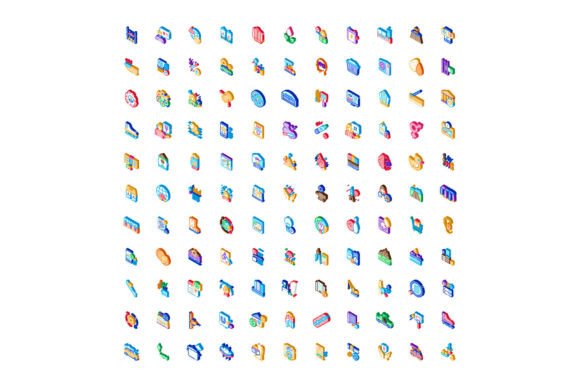
In a digital landscape saturated with flat design and minimalist line art, there is a growing hunger for depth, dimension, and personality. This is where an Isometric Icons Collection Representing the complexities of our modern world becomes an invaluable asset. Unlike traditional two-dimensional symbols, isometric graphics offer a pseudo-3D perspective that feels tangible and engaging without requiring the heavy rendering times of full 3D models. These vibrant symbols and pictograms are not just decorative; they are functional tools designed to bridge the gap between abstract concepts and user understanding across technology, healthcare, business, education, and beyond.
When you integrate an Isometric 3d icon set into your projects, you are essentially giving your audience a miniature world to explore. The slight tilt and extruded edges create a sense of space that flat icons simply cannot match. This depth draws the eye naturally, guiding users through infographics, landing pages, and app interfaces with a level of intuitiveness that reduces cognitive load. Whether you are explaining a complex SaaS workflow or illustrating a patient's journey through a healthcare system, these icons serve as universal translators, turning dense information into digestible visual stories.
Transforming Complex Data into Engaging Infographics
One of the most powerful applications of this collection is in the realm of infographics. Marketers and content creators often struggle to make statistical data or process flows look appealing. A standard bar chart is functional, but it rarely inspires. By swapping out generic markers for isometric illustrations of servers, cloud networks, or medical equipment, you transform a dry report into a compelling narrative.
Consider a tech blog explaining the architecture of a new blockchain protocol. Using flat squares to represent nodes can feel abstract and disconnected. However, utilizing an isometric icon set allows you to stack these nodes, show connections flowing between them in 3D space, and color-code different layers of security. The result is a visual that readers want to linger on, increasing time-on-page and social shareability. The vibrant nature of these pictograms ensures that even small details stand out, making them perfect for both desktop monitors and mobile screens where clarity is paramount.
Elevating User Interfaces in Apps and Online Services
The user experience (UX) of apps and online services relies heavily on immediate recognition. Users should never have to guess what a button does. While flat design has dominated UI for years, there is a subtle shift toward "neumorphism" and soft 3D elements that provide better affordance—clues about how an object should be interacted with. An isometric icon set fits perfectly here.
Imagine a fintech dashboard. Instead of a flat wallet icon, an isometric representation adds weight and value to the concept of savings. For an e-commerce platform, isometric shopping carts and delivery trucks create a sense of movement and logistics that feels dynamic. These icons work exceptionally well in onboarding sequences, where you need to guide a new user through features without overwhelming them with text. A sequence of three isometric scenes can explain a sign-up process faster than a paragraph of instructions, leveraging the brain's ability to process images 60,000 times faster than text.
Industry-Specific Applications: From Healthcare to Education
The versatility of an Isometric Icons Collection Representing diverse sectors is one of its strongest selling points. Different industries have unique visual languages, and a high-quality set covers them all with consistency.
- Healthcare: In medical presentations or patient portals, trust and clarity are non-negotiable. Isometric icons of stethoscopes, DNA helices, hospital beds, and telemedicine setups humanize the clinical experience. They soften the sterile environment of healthcare IT, making it feel more approachable for patients navigating insurance claims or booking appointments.
- Education: E-learning platforms benefit immensely from the playful yet structured nature of isometric art. Icons representing graduation caps, books, online classrooms, and certification badges create a gamified feel that encourages student engagement. The depth helps distinguish between different modules in a course, acting as visual signposts in a long learning journey.
- Business and Finance: Corporate presentations often suffer from boredom. Injecting isometric graphics of handshake deals, growth charts, and office buildings can revitalize a quarterly review. These icons convey professionalism while adding a modern, forward-thinking aesthetic that suggests innovation.
- Technology and IoT: Explaining the Internet of Things requires showing connectivity. Isometric icons allow designers to visualize smart homes, connected cars, and server farms in a way that shows physical relationships between devices, making the invisible network visible.
Practical Considerations Before Implementation
While the aesthetic appeal is undeniable, adopting an Isometric 3d icon set requires some strategic thinking. The primary consideration is consistency. Isometric art relies on a specific angle (usually 30 degrees) and lighting source. Mixing icons from different sets with varying perspectives can create a jarring, unprofessional look. It is crucial to ensure that every icon in your collection shares the same grid, shadow intensity, and color palette.
Another factor is scalability. Because isometric icons contain more detail than flat vectors, they can sometimes lose clarity when shrunk down to very small sizes, such as in a mobile navigation bar. It is essential to test these icons at their intended display sizes. If an icon becomes a muddy blob at 16x16 pixels, it might be better reserved for hero sections, feature blocks, or illustrative headers rather than functional navigation elements.
Color usage also plays a pivotal role. The vibrancy of these symbols is a strength, but over-saturation can lead to visual fatigue. When designing an infographic, use the brightest colors to highlight key data points or calls to action, while using muted tones for background elements. This hierarchy guides the viewer's eye exactly where you want it to go.
Navigating Limitations and Maximizing Strengths
No design solution is perfect for every scenario. The main limitation of isometric graphics is their file size and complexity compared to simple SVG lines. For websites where load speed is critical, you must ensure the assets are optimized. However, the trade-off is often worth it for the increase in user engagement and brand perception.
Furthermore, isometric designs can sometimes feel too "playful" for extremely serious or somber topics. While they work wonders for tech startups and educational tools, a law firm dealing with sensitive litigation might find them too informal. Context is king. The strength of this collection lies in its ability to simplify the complex and make the digital feel physical. It turns abstract data into something users feel they can touch and understand.
Ultimately, choosing an Isometric Icons Collection Representing your brand's values is about more than just picking pretty pictures. It is a decision to prioritize clarity, engagement, and modern aesthetics. Whether you are building the next great educational app, designing a healthcare portal, or crafting a business report that needs to stand out, these 3D pictograms offer a versatile language that speaks directly to the visual instincts of your audience. By thoughtfully integrating these vibrant symbols, you create a digital experience that is not only informative but genuinely enjoyable to explore.